

Tactical Emergency Casualty Care (TECC)
Tactical Emergency Casualty Care (TECC) Course by IESA
The TECC course by IESA is essential training for high-threat civilian medical response. It teaches practical trauma care principles for EMS professionals, active bystanders, and medical providers during active violence and mass casualty incidents. Most importantly, this course focuses on managing trauma in a tactical, hazardous civilian environment where every second counts.
Developed and endorsed
The TECC course by IESA was developed in partnership with the National Association of Emergency Medical Technicians (NAEMT) and endorsed by the American College of Surgeons. It reflects current medical knowledge and promotes critical thinking as the foundation for high-quality care.
Training objectives
- Apply trauma care guidelines during mass casualty and active shooter incidents.
- Use an all-hazards approach to operate outside normal EMS conditions.
- Strengthen core concepts through an interactive, scenario-driven learning design.
- Master the MARCH assessment and immediate action drills for tourniquet application.
- Understand pediatric considerations and manage casualties in complex environments.
- Integrate EMS zones (Hot/Warm/Cold) with tactical phases (Direct Threat/Indirect Threat/Evacuation).
Course structure: the 3 phases of tactical care
The TECC course by IESA covers three operational phases. Participants learn what to do, when to do it, and how to adapt under pressure.
- Hot Zone / Direct Threat Care: care delivered while under attack or in adverse conditions.
- Warm Zone / Indirect Threat Care: care delivered after threat suppression, while risk may still exist.
- Cold Zone / Evacuation Care: care delivered during extraction and evacuation from the incident site.
Course format and learning experience
The TECC course manual by IESA uses an engaging, interactive format. Instead of passive lectures, the course reinforces decision-making through practical application. In addition, TECC aligns EMS language with tactical terminology to support clear communication in the field.
What you will cover in the 16-hour classroom course
This 16-hour TECC classroom course by IESA includes new patient simulations and a final scenario-based exercise. Key topics include:
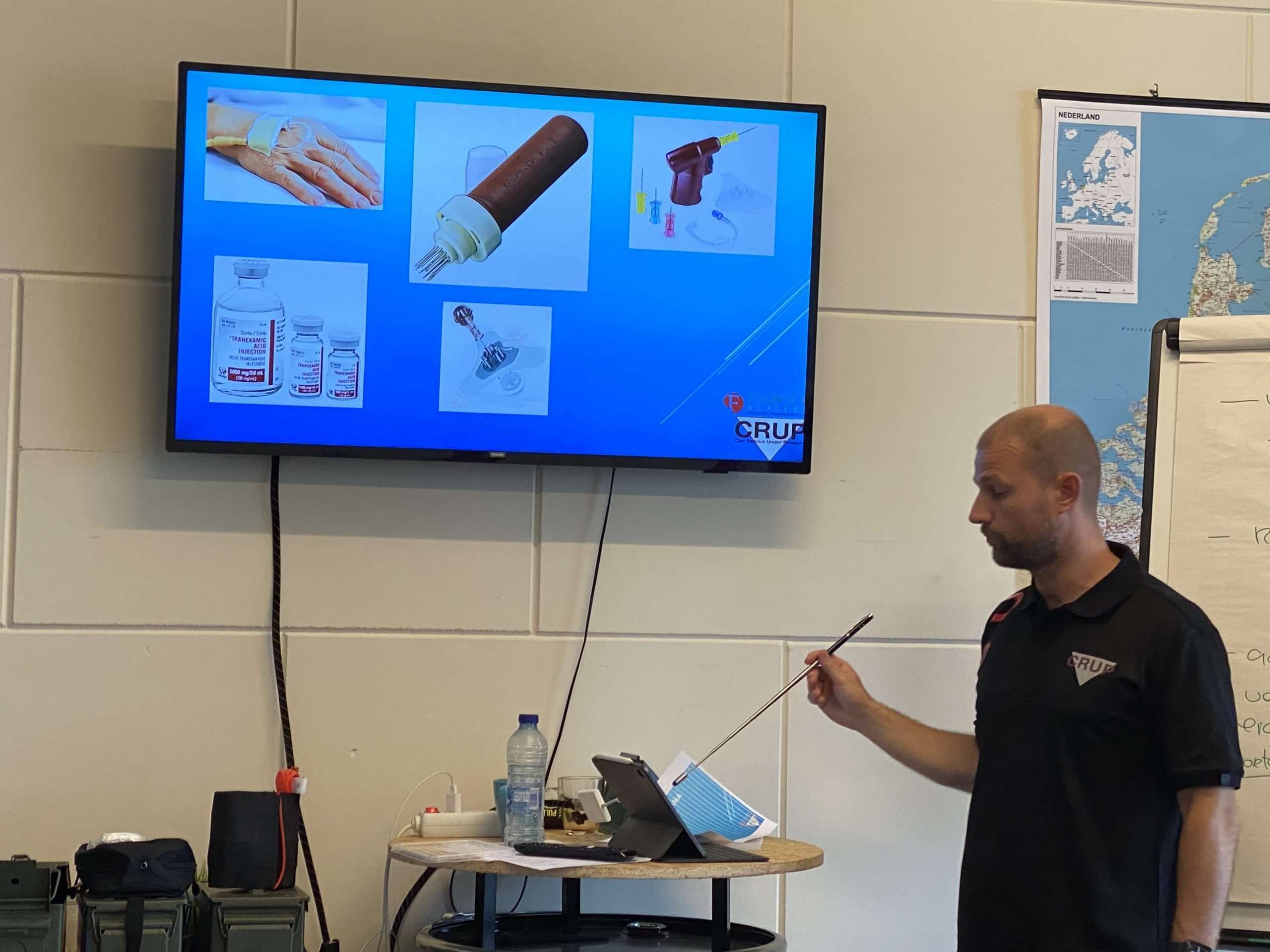
- Hemorrhage control, including immediate action drills for tourniquet application throughout the course
- Full coverage of the MARCH assessment
- Surgical airway control and needle decompression
- Strategies for treating wounded responders in threatening environments
- Pediatric casualty care considerations
- Victim movement techniques: dragging and carrying to safety
- Final mass-casualty / active shooter event simulation
Who this course is for
The TECC course by IESA is designed to reduce preventable deaths in the field. It is suitable for EMS practitioners at all levels, as well as active bystanders and medical providers who may face high-threat situations.
Course outcome
After completing the TECC course by IESA, participants can manage trauma effectively in high-threat civilian environments. Moreover, they can apply the TECC phases and communicate clearly using both EMS and tactical nomenclature when seconds count.